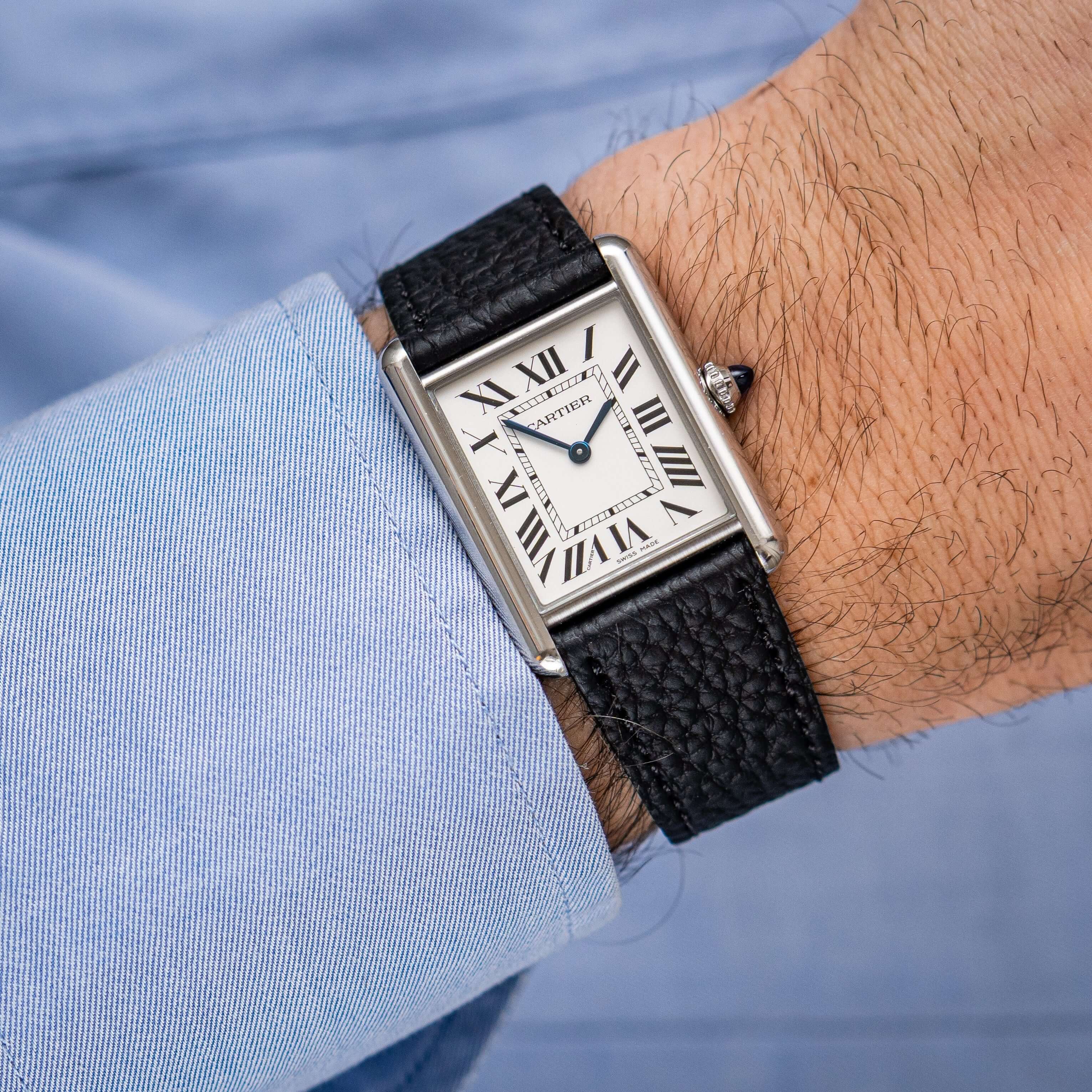
A watch strap is much more than just the connection between a watch and a wrist. Material, construction, and workmanship influence both the appearance, wearing comfort, and durability. Particularly with leather watch straps, there are significant differences between handcrafted and industrially produced items.
But what does "handmade" actually mean for a watch strap? And is a handmade leather strap automatically better than an industrially produced model?
The most important differences lie in the choice of materials, craftsmanship, the number of manual steps, and the possibilities for customization.
What does "handmade watch strap" mean?
The term "handmade" does not necessarily mean that a watch strap is produced entirely without machines. Even traditional manufacturers use machines and tools to perform individual work steps precisely and efficiently.
The crucial difference lies rather in how much skilled professionals are involved in the manufacturing process. In artisanal production, many work steps are carried out and controlled individually.
This can include, for example, cutting and splitting the leather, building the strap, gluing different layers of material, stitching, and finishing and sealing the edges.
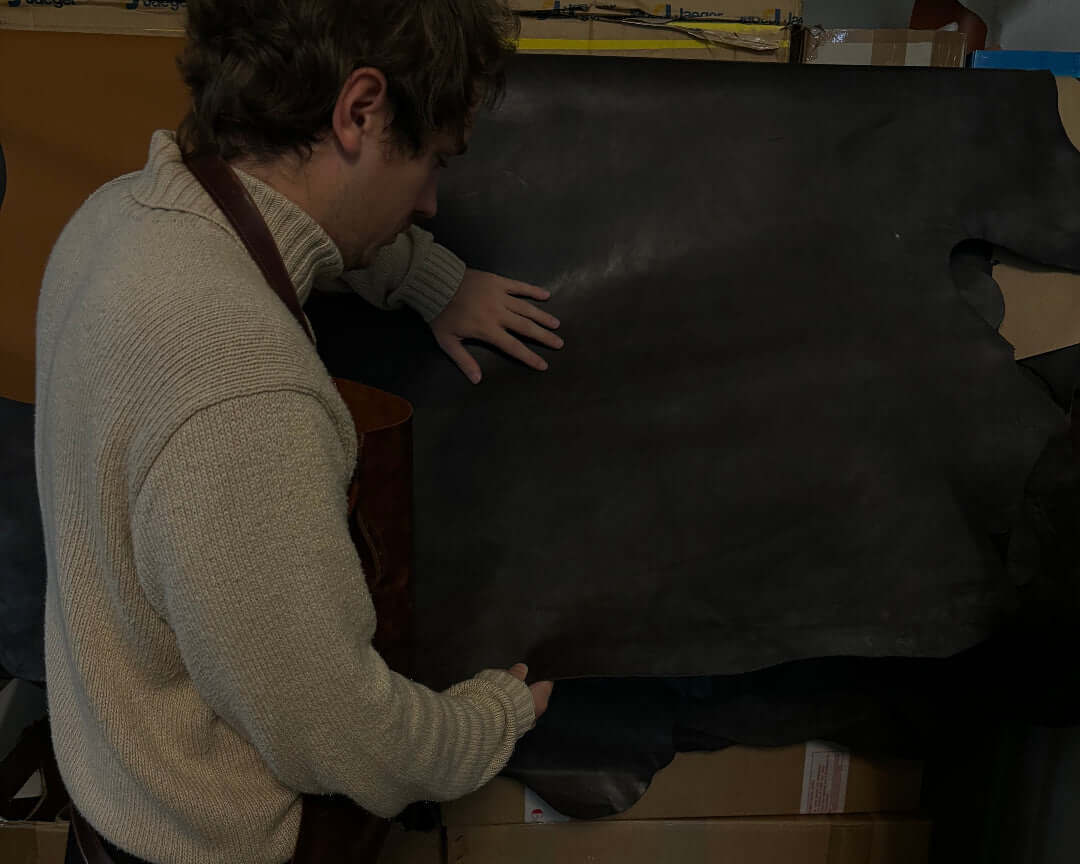
Especially with natural materials like leather, experience is crucial. No two hides are exactly alike. Structure, thickness, and texture can vary within a single piece of leather.
How are industrially manufactured watch straps produced?
Industrial production focuses on the most efficient and standardized manufacturing of large quantities. Many processes are automated or highly simplified, so that a large number of identical products can be produced at the lowest possible unit costs.
This is fundamentally not a negative thing. Industrial manufacturing enables favorable prices and consistent standardization.
However, for very inexpensive watch straps, cheaper materials, simpler constructions, and less elaborate processing steps are often used. The selection of individual leather areas may also be less individual in production designed for large quantities.
The difference to a manufacture is therefore often particularly evident in the details.
The choice of material makes a decisive difference
High-quality leather alone does not guarantee a high-quality watch strap. It is also crucial which area of a hide is used and how the material is processed.
In handcrafted production, the leather can be specifically selected for its structure, thickness, and texture. This is especially important for natural or highly textured leathers.
For alligator leather, for example, the position of the cut plays a decisive role in the later appearance. With vintage leathers, on the other hand, color gradients and natural characteristics can be deliberately used.
Fluco uses numerous selected leathers from internationally renowned tanneries for its watch straps. These include, depending on the model, leathers from Horween as well as high-quality European calf and cowhides. Selected models are also made from genuine Louisiana alligator leather.
Handcrafted production allows for more elaborate construction
A leather watch strap typically does not simply consist of a single piece of leather. Depending on the model, upper leather, lining leather, and various inserts can be combined.
Different constructions can influence whether a strap appears particularly flat and elegant or robust and sporty.
In handcrafted production, these properties can be specifically matched to the respective style of the strap. A delicate strap for a dress watch, for example, requires a different construction than a robust vintage strap for a large pilot's watch.
Details such as the tapering towards the clasp, the padding, and the shape of the strap end also significantly influence the appearance.
Edges and seams show the quality of workmanship
The quality of workmanship of a leather watch strap can be particularly well recognized by its details.
Cleanly executed seams should run evenly and match the character of the strap. The edges also play an important role. Depending on the construction, they can be folded, sanded, dyed, or sealed in several steps.
These steps are time-consuming but have a great influence on the appearance and durability of the finished strap.
For high-quality watch straps, it is therefore worthwhile not only to pay attention to the upper leather. The finishing of edges, seams, lining, and buckle holes often says at least as much about the quality.
Is a handmade watch strap more durable?
Not automatically. Durability depends heavily on the leather used, the construction, the workmanship, and subsequent use.
However, a high-quality handmade watch strap has the advantage that material and construction can be specifically coordinated. Cleanly finished edges and seams can also contribute to a long lifespan.
However, usage remains crucial. Even the highest quality leather strap can wear out more quickly through prolonged contact with water, heavy perspiration, or improper care.
A great advantage: Customization and bespoke production
A key difference between manufacture and industrial mass production lies in the possibilities for customization.
While industrial products are designed for fixed sizes and variants, manufactures can often respond more flexibly to special requirements. This can include special lengths, strap widths, seam colors, or other individual details.
Especially for high-quality, older, or unusual watches, this can be crucial if standard sizes do not fit optimally.
Traditional watch strap manufacturing at Fluco
Fluco has been manufacturing watch straps in Furth im Wald, Bavaria, since 1952. In its own manufactory, leather watch straps are created through numerous individual work steps.
Fluco combines traditional craftsmanship with modern machines and tools. True manufactory work does not mean completely doing without machines. Rather, it means that crucial work steps are carried out and controlled by experienced specialists.
From classic calfskin straps to characterful vintage leathers, as well as Shell Cordovan and selected alligator leather watch straps, various models are created for classic and modern watches.
Handmade or industrially manufactured – which is better?
Both manufacturing methods have their justification. Anyone looking for a watch strap that is as inexpensive and functional as possible can be completely satisfied with an industrially produced product.
However, those who value high-quality materials, artisanal workmanship, special leathers, and individual details will more often find these characteristics in a high-quality manufactory product.
Especially for a high-quality mechanical watch, an artisanally crafted leather watch strap can be a fitting complement. After all, a mechanical watch itself combines traditional technology, precision, and craftsmanship.
Conclusion: The differences lie primarily in the details
The most important difference between handmade and industrially manufactured watch straps is not whether machines are used in production. Rather, the crucial factors are material selection, construction, workmanship, and the proportion of skilled manual labor.
A high-quality manufactory watch strap is characterized by carefully selected materials and elaborate workmanship. At the same time, artisanal production allows for greater variety and more possibilities for customization.
Since 1952, Fluco has combined this form of traditional watch strap manufacturing with selected leathers from various regions of the world. This results in watch straps made in Germany where not only the material, but above all its processing, is the focus.