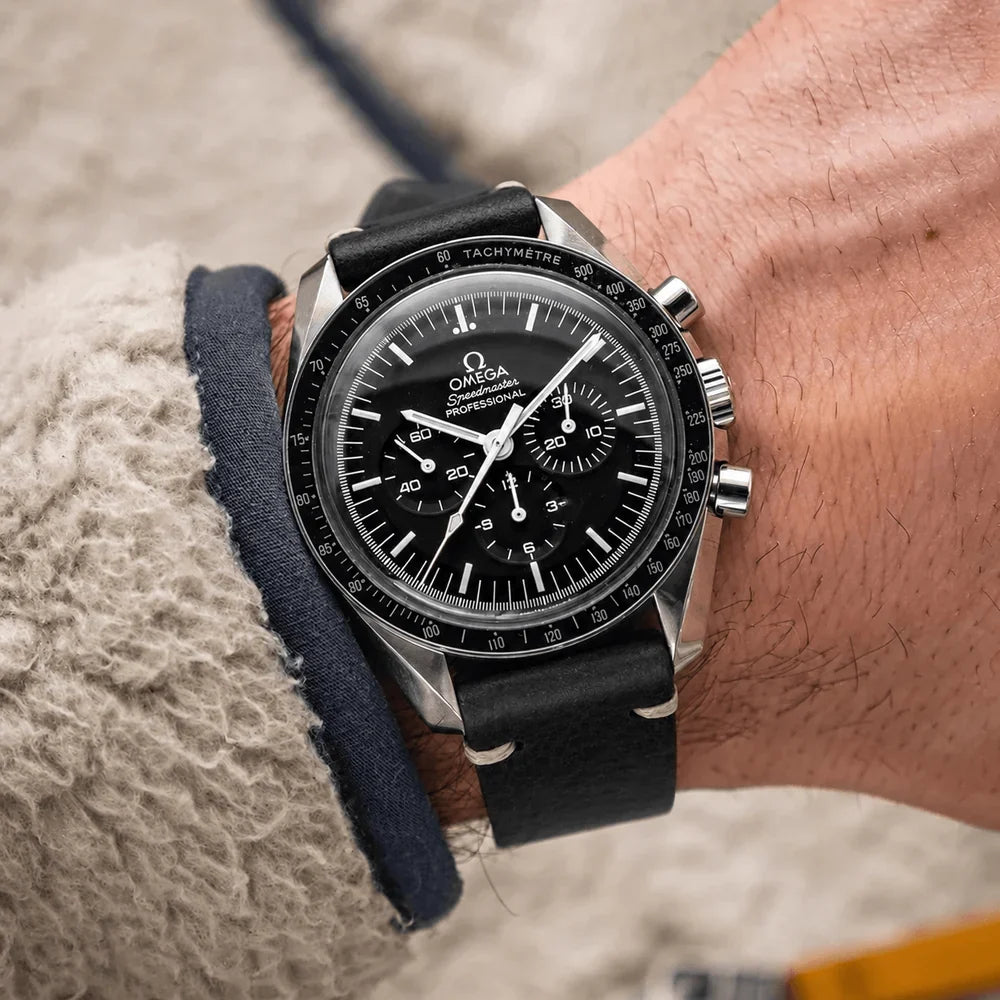
A high-quality leather watch strap can be worn for a long time and even gain character with age. However, to keep the leather beautiful and supple for as long as possible, proper care and conscious handling in everyday life are crucial.
The most important rules are simple: Avoid excessive contact with water and sweat, allow the leather to dry regularly, use care products sparingly, and do not unnecessarily expose the watch strap to strong heat or humidity.
However, the right care also depends on the specific type of leather.
Why does a leather watch strap need care?
Leather is a natural material. Through regular wear, a watch strap comes into contact with skin, sweat, moisture, sunlight, and friction.
Over time, this can change the leather's appearance and texture. To a certain extent, this is completely normal. Especially natural and vegetable-tanned leathers often deliberately develop an individual patina.
However, incorrect exposure can significantly shorten its lifespan. Prolonged moisture and heavy soaking, in particular, can damage the material.
1. Avoid water as much as possible
Most classic leather watch straps are not designed to be regularly soaked through. While individual water drops are usually not a problem, a watch with a leather strap should always be removed for swimming or showering.
If the strap does get wet, it should be allowed to dry slowly at room temperature.
A wet leather watch strap should not be placed on a heater or dried with a hairdryer. Strong heat can strip moisture from the leather, causing it to become hard or brittle.
2. Don't leave sweat in the leather permanently
Sweat is one of the biggest stresses for a leather watch strap. Especially in summer, the leather can absorb moisture for several hours.
After heavy sweating, the watch should therefore be removed, and the strap should be well-ventilated. Light moisture on the surface can be carefully wiped off with a soft, dry cloth.
If you sweat heavily or exercise regularly, it is better to switch to a more water-resistant watch strap made of, for example, FKM rubber or a suitable textile material for these activities.
3. Allow the leather watch strap to dry regularly
A common mistake is wearing the same watch with the same leather strap every day from morning to night.
Leather absorbs moisture when worn. If possible, the strap should therefore be allowed to dry completely and air out in between wears.
Those who own multiple watches or watch straps can switch them regularly. This not only protects the leather but also allows for changing the character of a watch with different straps.
4. Carefully remove dirt
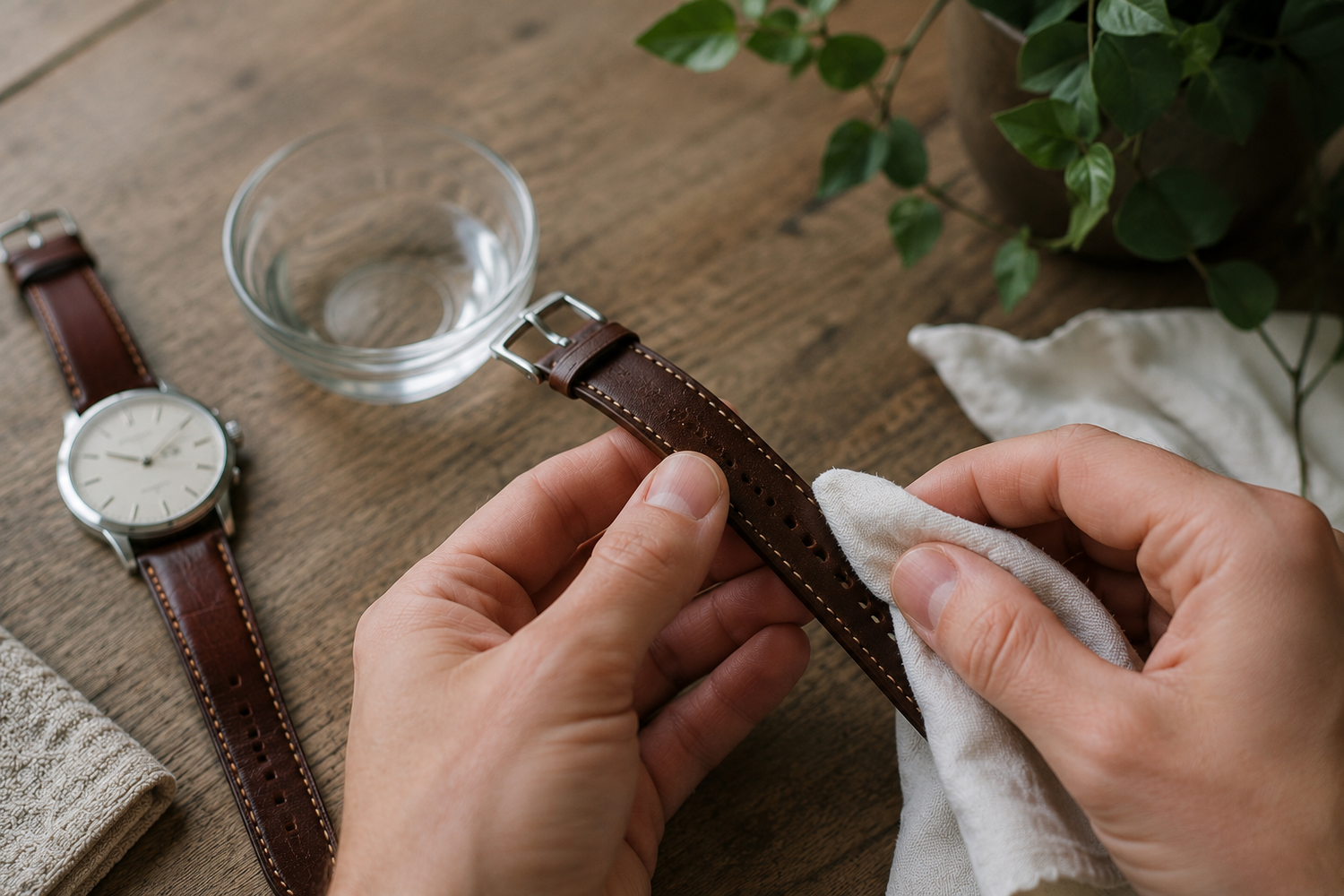
Light dirt can often be removed with a soft, dry, or only minimally damp cloth.
Aggressive cleaning agents, alcohol, or household cleaners should be avoided on leather. They can attack the surface, change the color, or strip essential oils from the material.
It is also important not to rub the leather too vigorously. Especially delicate surfaces can change their structure as a result.
5. Use leather care products sparingly
When using leather care products, the rule is: Less is usually more.
Not every care product is suitable for every type of leather. A classic leather care product that works for smooth calfskin, for example, can completely change the appearance of nubuck or suede.
For smooth leather, a very small amount of a suitable leather care product can occasionally be used. The product should first be tested in an inconspicuous area.
However, a high-quality watch strap does not need to be constantly creamed or treated. Too much care can alter the surface and unnecessarily saturate the leather.
6. Nubuck and suede require different care
Nubuck and suede have an open, velvety surface and should therefore be treated differently from classic smooth leather.
Greasy leather creams are generally unsuitable here, as they can glue the fine surface and permanently alter the appearance.
Light dirt can be carefully removed with a suitable soft brush, depending on the leather. Here too, moisture should be avoided as much as possible.
7. Treat alligator leather carefully
Genuine alligator leather is a high-quality natural material and should be treated with appropriate care.
It is particularly important not to expose the strap to moisture for prolonged periods. For cleaning, a soft, dry cloth is often sufficient.
When using special care products, ensure that they are explicitly suitable for exotic leathers. Unsuitable products can alter the shine and color of the surface.
8. Don't "care away" vintage leather and patina
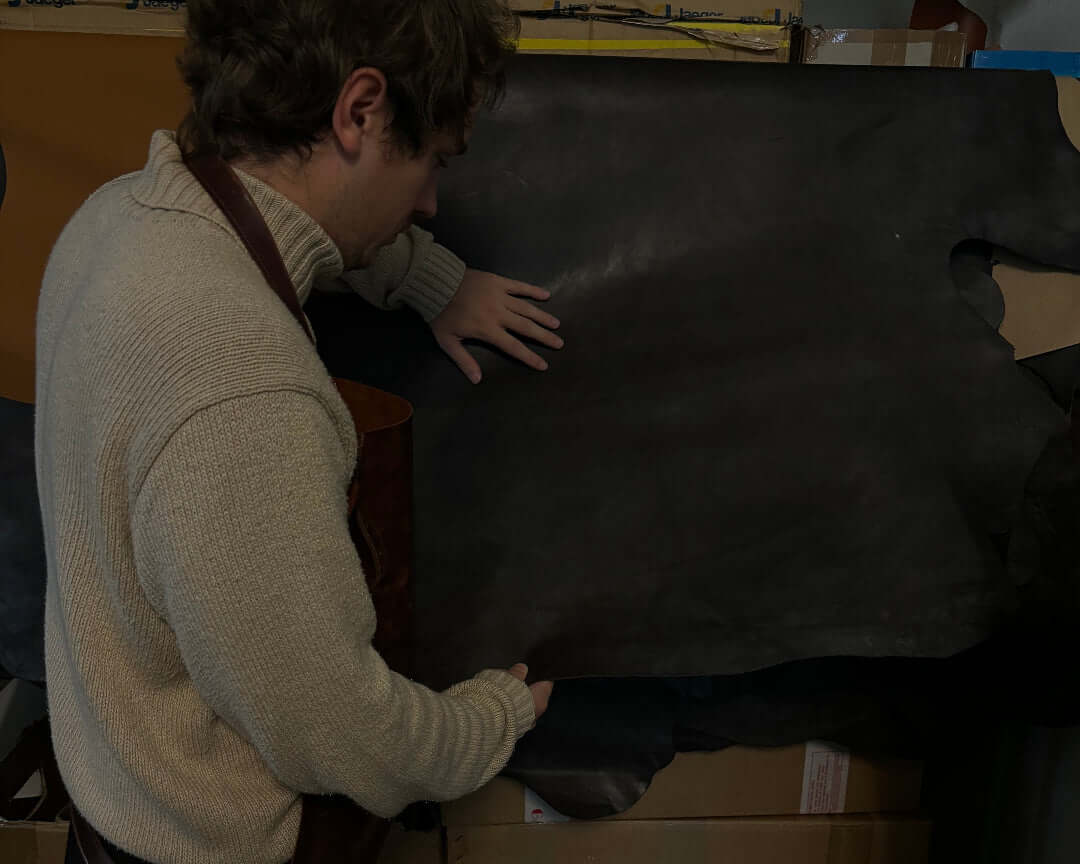
For leathers like Chromexcel or vegetable-tanned vintage leathers, the change in surface is part of the material's character.
Scratches, color changes, and an increasing patina are not automatically a sign of poor quality in such leathers. Rather, each strap develops an individual look over time.
Overly intensive care can alter this desired character. Therefore, a restrained approach should also be taken here.
9. Store leather watch straps correctly
If a watch is not worn for a long time, it should be stored in a dry and well-ventilated place.
Direct, prolonged sunlight and strong heat should be avoided. A consistently very humid environment is also not ideal for leather.
The strap should also not be unnecessarily bent or compressed. A watch box or watch roll can help to store the watch and strap protected.
How long does a high-quality leather watch strap last?
A general lifespan cannot be stated. How long a leather watch strap lasts depends heavily on the type of leather, the craftsmanship, and above all, on its use.
A leather strap worn daily and regularly exposed to sweat and moisture will naturally show signs of wear more quickly than a strap worn only occasionally.
Proper care can significantly extend its lifespan. At the same time, one should accept with leather that it is a natural material that changes with wear.
The right care for Fluco leather watch straps
Since 1952, Fluco has been manufacturing leather watch straps in its own factory in the Bavarian Forest, processing numerous different types of leather. Accordingly, there is no one perfect care for every leather strap.
Smooth calfskin requires different treatment than suede, Shell Cordovan, Chromexcel, or genuine alligator leather.
Fundamentally, for high-quality Fluco leather watch straps: Reduce moisture as much as possible, allow the strap to air out regularly, and use care products only selectively and appropriately for the respective leather type.
If unsure about the correct care for a particular Fluco watch strap, it is advisable to consider the properties of the respective leather type before using a care product.
Conclusion: Less care is often more for leather
Proper care for a high-quality leather watch strap is simpler than many think. A conscious approach to the material is crucial.
Avoid water and heavy sweat as much as possible, allow the strap to dry regularly, and do not use aggressive cleaning agents. Leather care should only be used sparingly and appropriately for the respective leather type.
By following these basic rules, you can enjoy your leather watch strap for a long time. At the same time, high-quality leather is allowed to develop its own character over time – because it is precisely a natural patina that makes many leather watch straps particularly individual with increasing age.